
UTA Flight 772 - A Second Lockerbie?
Blown Out Of The Skies At 35,000ft

September 19, 1989
As the McDonnell Douglas DC‑10 leveled off at cruising altitude, 170 passengers and crew settled in for what was expected to be a smooth flight to Paris. Lunch trays clinked in the cockpit. Below, the golden sands of the Ténéré Desert drifted past in silence. Everything pointed to a routine, uneventful journey.
But then — a sudden, violent blast tore through the aircraft. In an instant, the jet disintegrated mid-air. Debris rained down across one of the most remote stretches of desert on Earth. The center section of the plane, still loaded with tonnes of fuel, struck the ground and exploded in a massive fireball.
Tragically nobody on board survived the crash.
In this article, we uncover the full story behind the loss of UTA Flight 772 — from the mid-air explosion, through an intense investigation, to the links with the 1988 Lockerbie Disaster.
Key Facts About UTA Flight 772
Flight number: UT772 / UTA772
Airline: Union de Transport Aériens
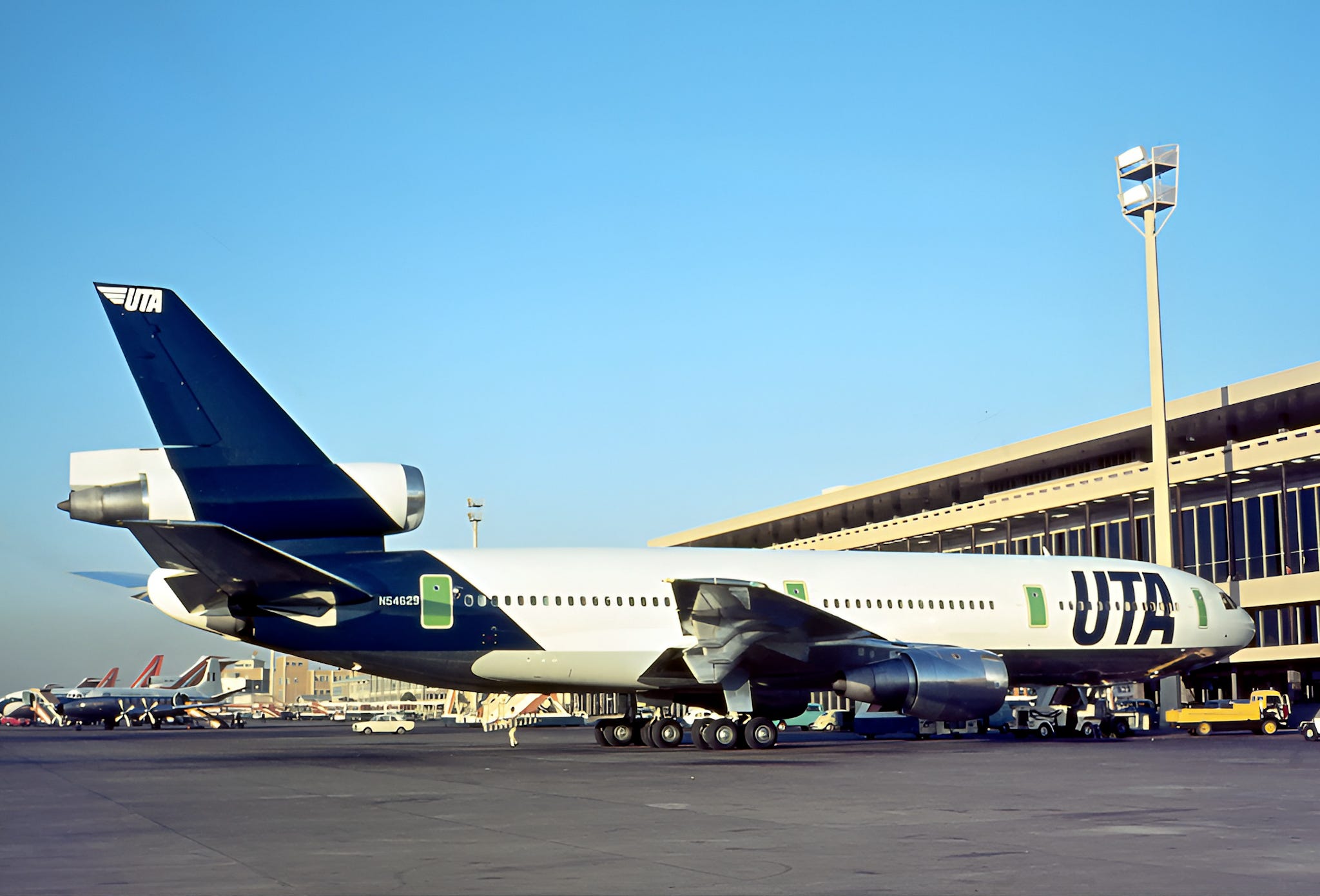
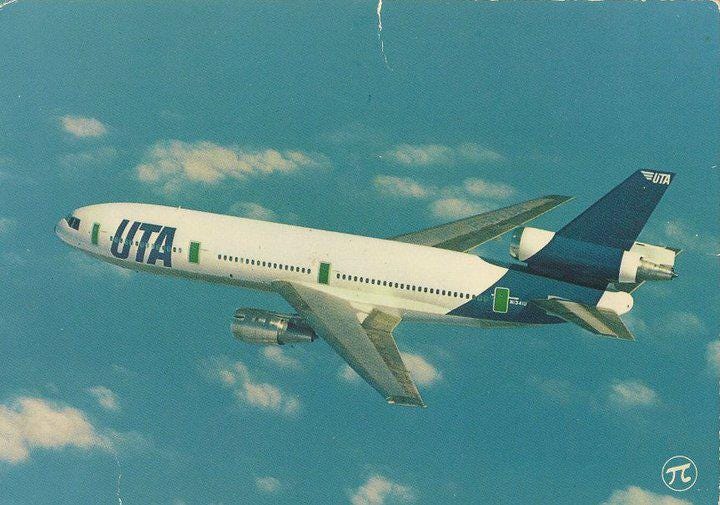
Aircraft: Douglas DC-10-30
Registration: N54629
First Flight: 1973
Aircraft Age: 16 years
Occupants: 170
Passengers: 156
Crew: 14
Fatalities (Aircraft): 170
Survivors: 0
Mortality Rate: 100%
Fatalities (Ground): 0
Injuries (Ground): 0
Route:
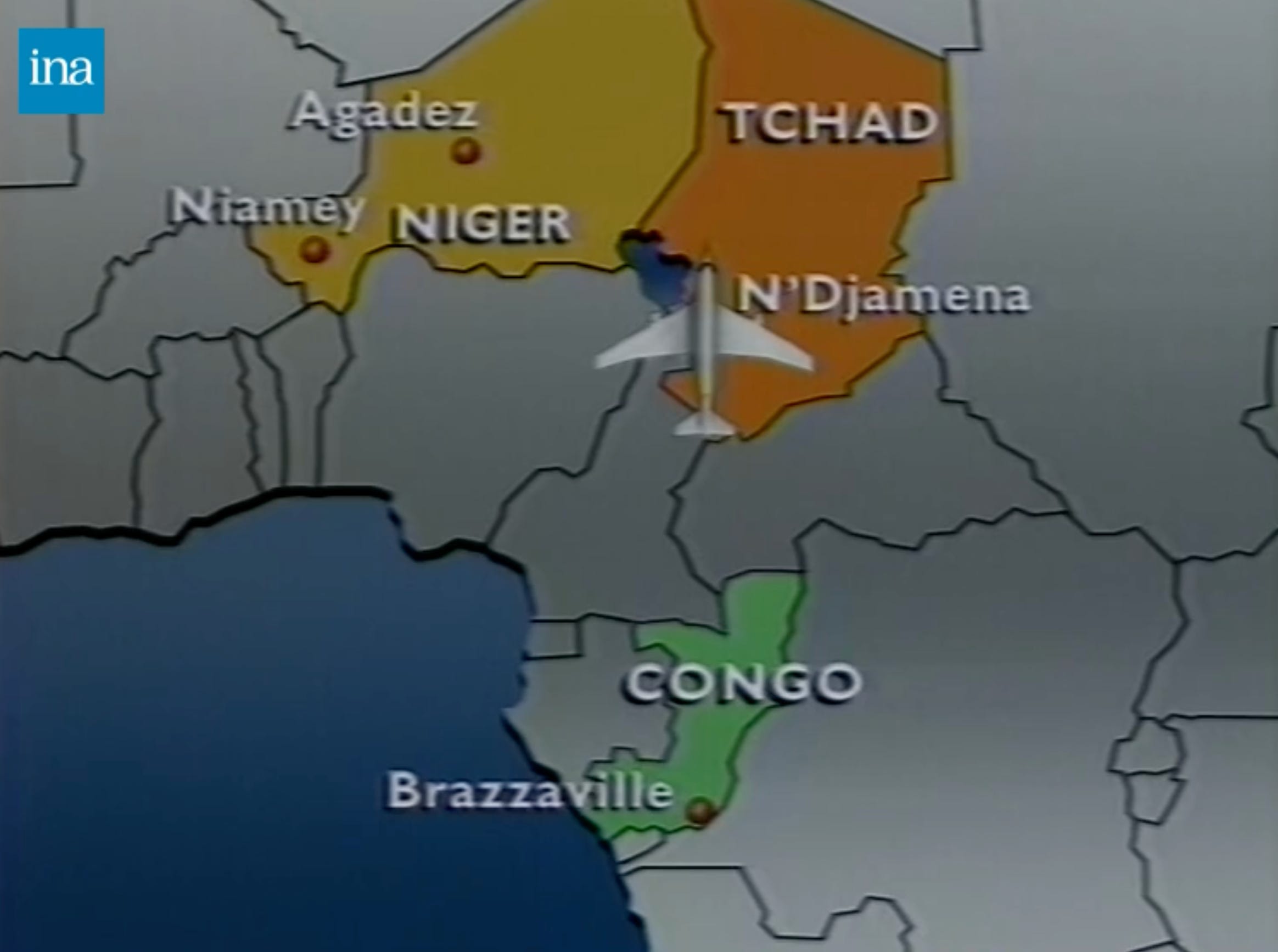
Brazzaville (Congo) → N’Djamena (Chad) → Paris (France)
Chapter 1 – The Uneventful Flight: Congo to Chad
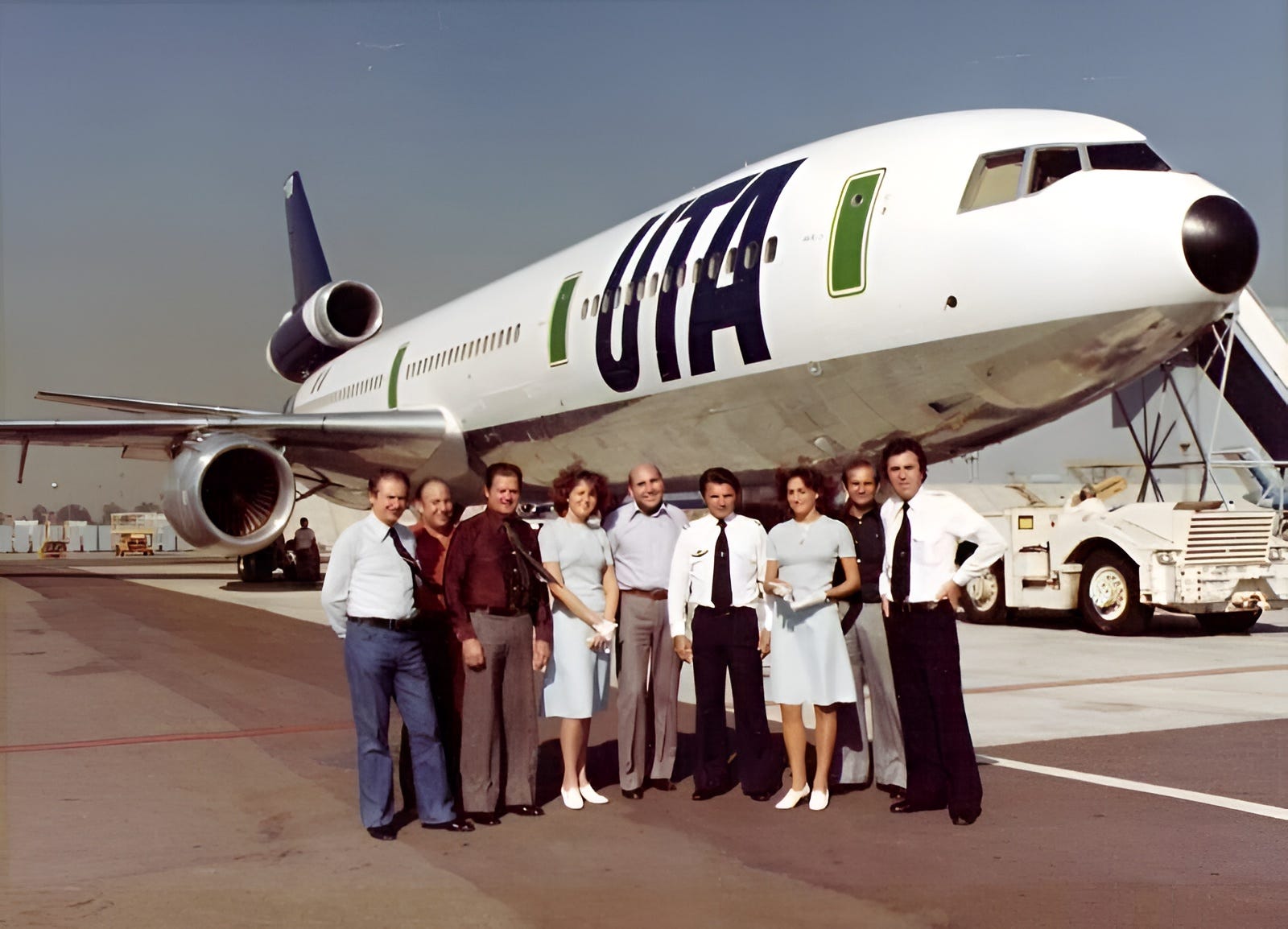
UTA Flight 772 began its journey at Brazzaville Airport in the Republic of the Congo. There, 86 passengers boarded the aircraft along with 14 crew members: three pilots, a flight engineer, and ten cabin crew. The route included a planned stopover in N’Djamena, Chad, before continuing on to its final destination: Paris, France. The flight departed Brazzaville around 09:00 UTC. The aircraft assigned to the route was a Douglas DC‑10, registration N54629 — a 16-year-old widebody jet delivered brand new to UTA in May 1973. At the time of the flight, the aircraft had accumulated 60,267 flight hours.
The Flight Deck Crew
On this flight, the cockpit crew unusually consisted of four members instead of the standard three. The reason: the captain was tasked with evaluating a junior pilot.
Flying experience:
Captain: 11,039 total hours (2,723 on DC‑10)
Co-pilot: 8,357 hours (754 on DC‑10)
Left-seat pilot (under evaluation): 6,442 hours (only 28 on DC‑10)
Flight Engineer: 597 hours total, 180 on DC‑10
With over 11,000 hours of flight experience, the captain was by far the most experienced member of the flight crew. The rest of the team ranged from moderately to low experience on the DC‑10 specifically.
At 11:13 UTC, Flight 772 landed without incident at N’Djamena after an uneventful leg across Central Africa. The aircraft taxied to its assigned parking position. Since the DC‑10 had been fully fueled back in Brazzaville, 49,400 kilograms of fuel remained in the tanks — enough for the onward flight to France. During the roughly one-hour stopover, nine passengers disembarked while 79 new passengers boarded, bringing the total number of people on board to 170.
Union de Transports Aériens (UTA) was a French long-haul carrier founded in 1963. It specialized in connecting Paris with major cities across Africa, but also offered flights to destinations in Asia and the Pacific. In 1992, the airline was fully merged into Air France after decades of operation.
Chapter 2 – The Last Departure: Chad to France
At 12:13 UTC, UTA Flight 772 departed from N’Djamena, bound for Paris. The aircraft took off with a total weight of 187,700 kilograms, well within the structural limits of the DC‑10. The departure and initial climb were routine. Weather conditions were favorable — calm air, no turbulence, and scattered cloud layers without any meteorological anomalies. After departure, the flight was scheduled to proceed along a series of planned navigation points: BOSSO, INISA, DJANET, and from there, follow the standard routing to Paris. At each of these checkpoints, the crew was expected to report to the respective air traffic control sectors. At 12:32 UTC, the aircraft made a routine position report: steady at flight level 350 (35,000 feet / 10,668 meters).
Weather Information
Along the route so far, the weather was stable:
1–3/8 Cumulus clouds near Lake Chad, with bases at 1,200–1,400 m and tops up to 3,000 m
2–5/8 Altocumulus forming further north, from about 4,500 m to 7,000 m
3–7/8 Cirrus clouds drifting between 8,000 and 10,000 m
➤ None of these layers posed any threat to flight operations.
Just two minutes later, at 12:34 UTC, Flight 772 made its final radio transmission to air traffic control in N’Djamena, reporting passage over waypoint BOSSO. The next mandatory report was scheduled for 13:10 UTC, at waypoint INISA — the handover point between N’Djamena and Niamey Control (Niger). But the aircraft never made it that far. At 12:59 UTC, 46 minutes after takeoff, while the flight crew was having lunch and monitoring the flight progress, UTA Flight 772 was destroyed by a sudden mid-air explosion at cruising altitude in completely normal flight conditions. The aircraft broke apart instantly and crashed over remote desert terrain within the territory of Niger. No distress calls were made. No warning signs. Nothing.
Chapter 3 – Loss of Contact
When no position report was received from UTA Flight 772 at waypoint INISA, the Flight Information Center in N’Djamena repeatedly attempted to establish radio contact — but received no response. Efforts to reach the aircraft through neighboring air traffic control centers also failed. No one knew where Flight 772 was — or what had happened to it.
At 14:30 UTC — 1 hour and 20 minutes after the expected report — N’Djamena ATC initiated the INCERFA phase, the ICAO “uncertainty phase”, indicating concern over a missing aircraft.
Another 85 minutes later, at 15:55 UTC, the situation escalated to ALERFA (“alert phase”), and finally, at 16:14 UTC, the DETRESFA phase was declared — the official distress phase, signaling a likely accident. But with nightfall approaching around 17:30 UTC, no immediate air search could be launched.
The following morning, at 04:45 UTC, a French Air Force Transall reconnaissance aircraft took off to begin the aerial search.
Chapter 4 – Debris Found
Because the aircraft was not equipped with an Emergency Location Beacon that would automatically transmit its position upon ground impact, search crews had no precise coordinates to begin with. The French Air Force Transall reconnaissance aircraft began retracing the DC‑10’s flight path, focusing on the region where the aircraft had last reported in.
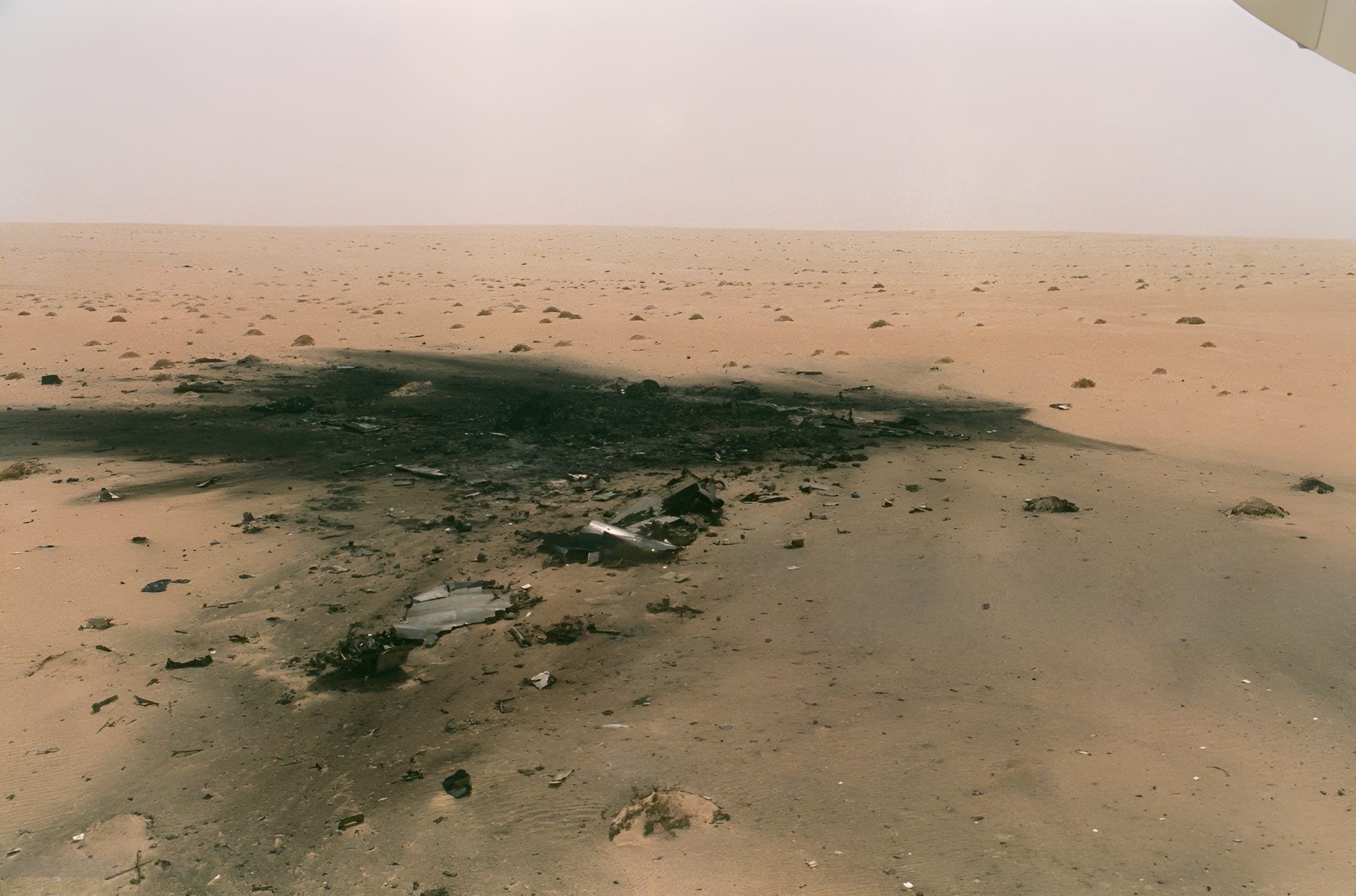
At 06:35 UTC, while flying over the remote Ténéré Desert, the crew spotted something devastating: debris on the sand below. As the Transall continued its pass, the scale of the destruction became clear — a blackened scar across the desert floor and scattered aircraft wreckage all over the area. The crash site was located northeast of the Termit Massif, along the planned route of Flight 772.
The main debris field stretched over 16 kilometers in length and 6 to 8 kilometers in width. When accounting for light fragments carried by the wind, the total area affected may have extended up to 80 kilometers. The landscape surrounding the crash site was barren — sand dunes, thorn bushes, and nothing else for miles. Ground teams, military units, and investigators immediately deployed to the site, arriving during the course of September 20th, 1989.
Upon arrival, investigators focused on three main objectives:
Locate and recover the flight recorders (CVR & DFDR)
Examine the engines to determine if mechanical failure had played a role
Inspect the cargo doors for signs of malfunction or structural breach
The Digital Flight Data Recorder (DFDR) was recovered on Thursday afternoon, September 21st. Though damaged — its protective casing had cracked — it was still intact enough for analysis.
The Cockpit Voice Recorder (CVR) was found the next morning, Friday, September 22nd, just 50 meters from the DFDR. Its condition was significantly better: no external damage, only surface soot from the post-impact fire.
Both units were immediately flown to Paris, where they were decoded overnight from September 22nd to 23rd. The CVR tape was found undamaged and fully readable.
All three engines showed heavy internal damage caused by high-speed ingestion of debris, indicating they were still running at high power at the time of breakup. This allowed investigators to quickly rule out engine failure as the cause of the crash.
💥 A Suspicious Pattern in the Debris
But one observation stood out immediately:
The size and spread of the debris field clearly indicated that the aircraft had broken up mid-air — not upon ground impact.
The wreckage had separated into four major sections, later referenced as A, B, C, and D:
Section A: Cockpit and forward cabin, located 5.1 km south of the main wreckage. The bodies of the flight crew and a flight attendant were still inside.
Section B: Forward cargo hold and adjacent cabin sections — 7 km further north of the cockpit debris.
Section C: The main fuselage, including both wing-mounted engines (No. 1 & No. 3) and parts of the passenger cabin. This section struck the ground upside down and burned intensely due to the large volume of jet fuel. Numerous bodies remained inside where the fire was fierce.
Section D: The rear fuselage, including engine No. 2, the vertical fin, and right stabilizer.
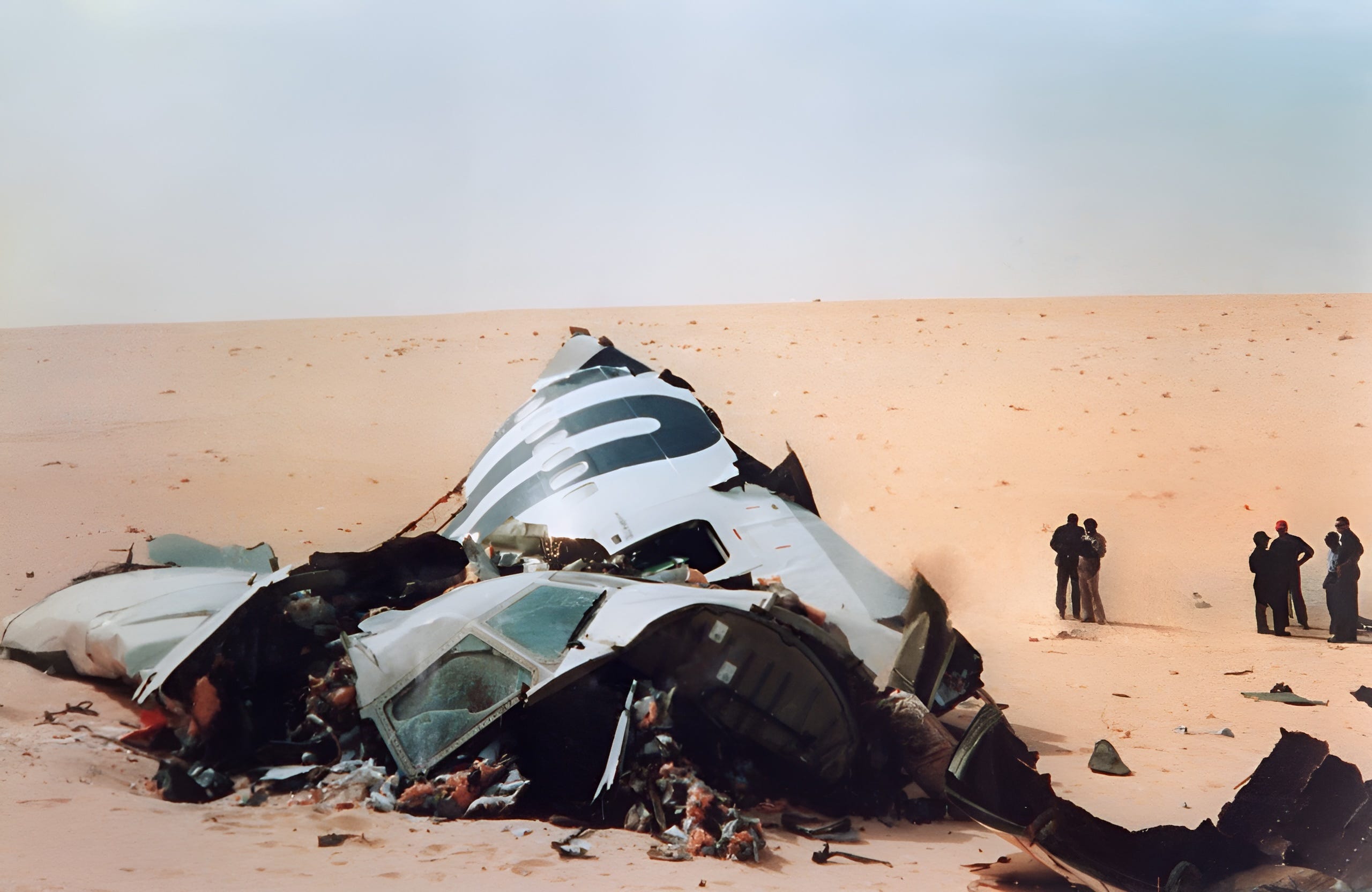
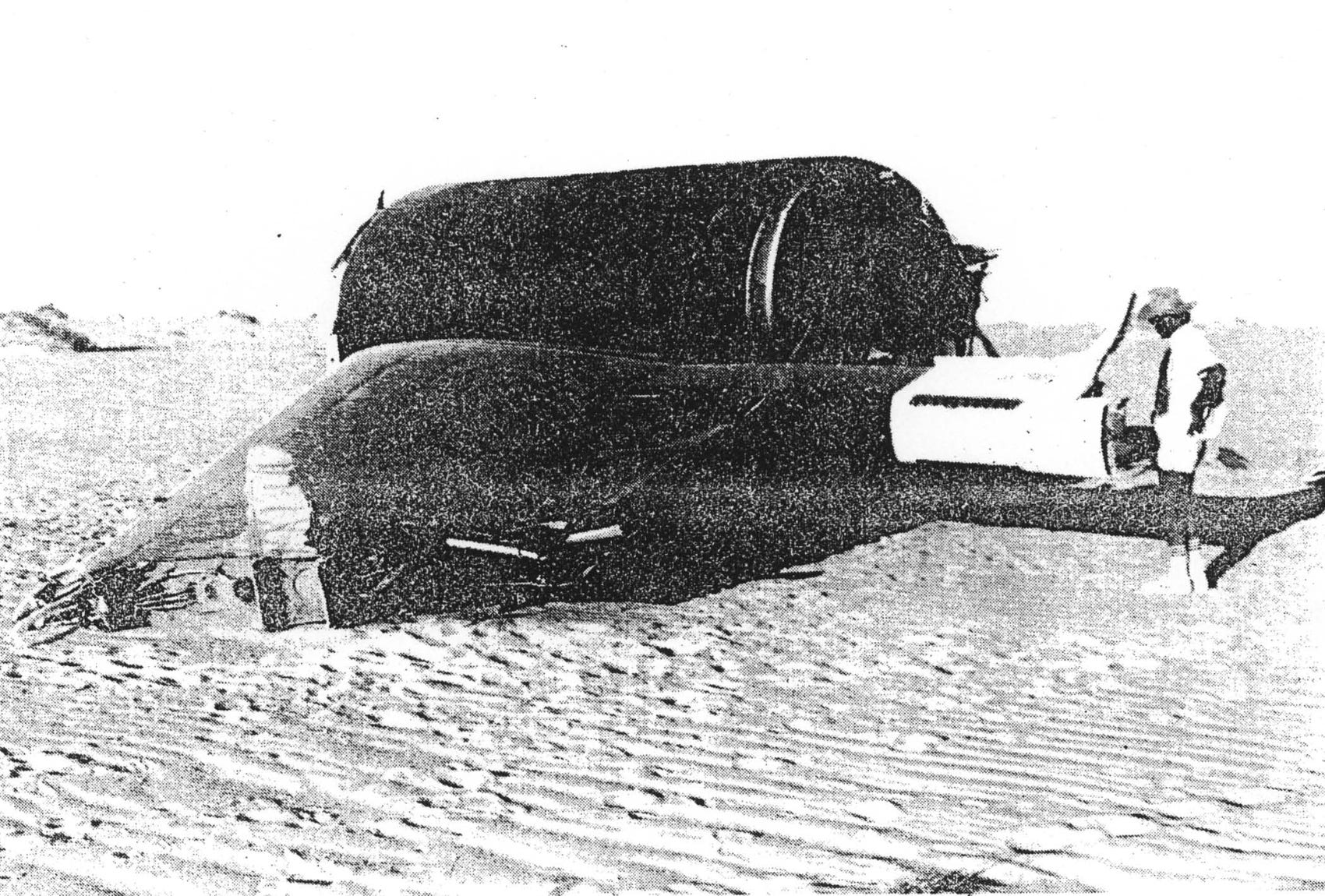
A particularly notable finding concerned Section B.
Unlike the other main structures (which had fallen mostly intact), debris from Section B was shattered into over a dozen smaller fragments — a highly unusual pattern.
Investigators quickly began to suspect that an explosion had occurred within Section B during flight.
At that point, three possible causes were considered:
Structural failure due to metal fatigue or pressure
Cargo door malfunction, similar to previous accidents (AAL96 in 1972, THY981 in 1974)
Or — most troubling — a bomb hidden on the airplane.
Chapter 5 – The Challenging Investigation
From the moment investigators saw the size and distribution of the debris field, it was evident that Flight 772 had broken up at cruising altitude. The absence of a distress call further supported this: whatever had happened, it had occurred suddenly and catastrophically, leaving the crew no time to react.
With early analysis indicating that Section B of the aircraft had sustained the most severe damage, investigators decided to prioritize locating and recovering debris from that area, before wind and shifting sands could bury critical evidence.
🔎 Ground Search Operation
On September 27, a systematic combing operation began, covering an area of 60 square kilometers. The search team consisted of:
16 civil aviation investigators
Around 30 Nigerian soldiers
30 French paratroopers
Four helicopters
Several all-terrain trucks
Airborne coordination and comms support provided by a Breguet Atlantic aircraft from the French Air Force
The operation led to the recovery of approximately 90% of Section B, along with several pieces showing evidence of a blast.
Among the debris were:
Large fragments of fuselage skin
Pieces of the forward cargo hold floor
Damaged containers and container parts
A cargo pallet
The recovered parts were first transported by truck to N'Guigmi, some 350 kilometers away. From there, they were airlifted by French Air Force Transall to Niamey, then flown by UTA to a hangar at Dugny Air Force Base, located at Paris–Le Bourget Airport, where the forensic investigation began.
📁 Maintenance & Flight Recorder Analysis
Meanwhile, the aircraft’s maintenance records were reviewed. The DC‑10 had been maintained by the KSSU group, in full compliance with aviation standards. No anomalies were found. Both flight recorders were also analyzed in Paris. Their data revealed no technical irregularities. The entire recording portrayed a completely normal cruising flight: all communications, flight parameters, and crew procedures were routine.
Minor engine variations were logged, but could be attributed to standard crew adjustments.
🧪 Forensic Reconstruction of Section B
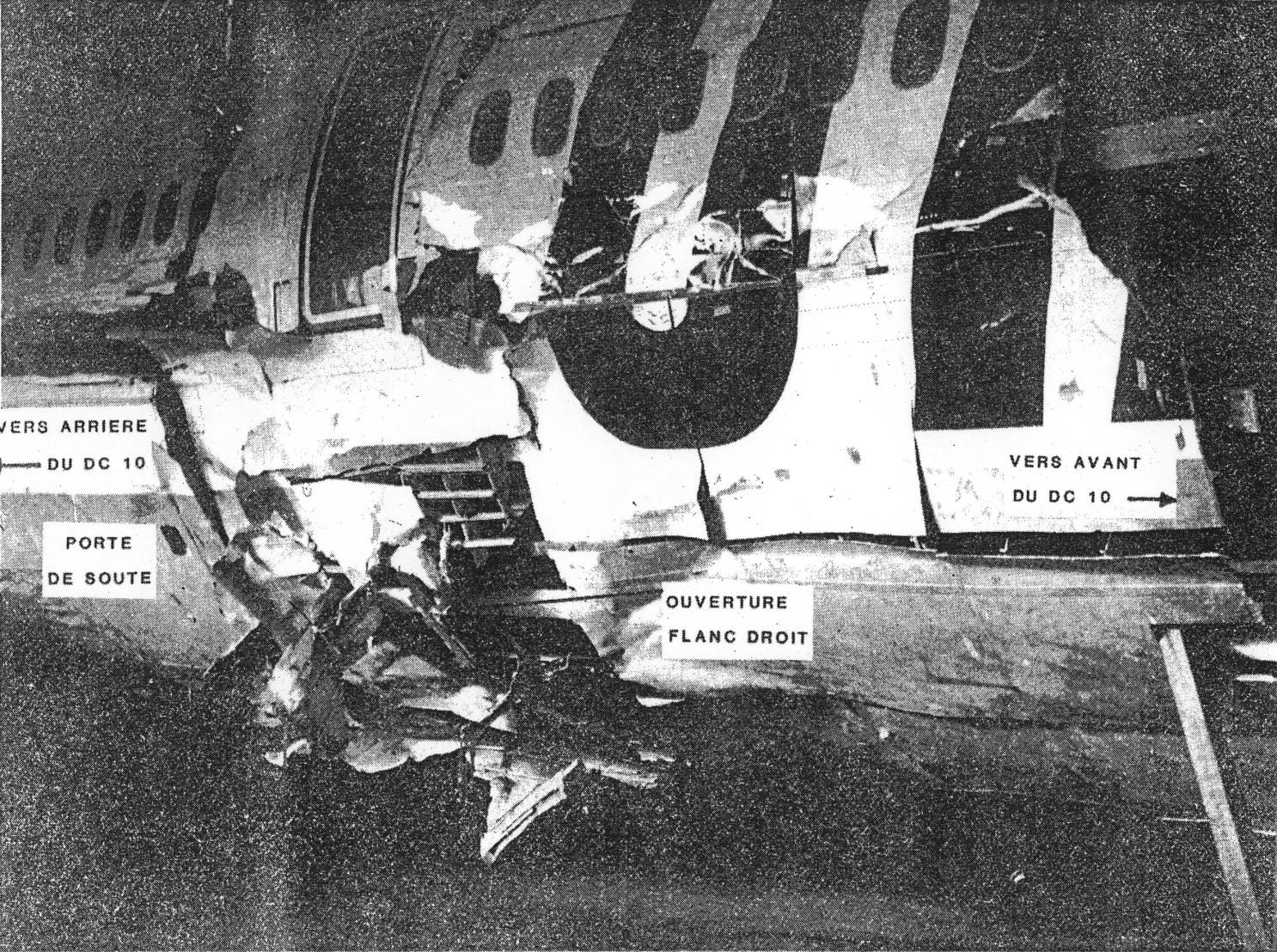
In Paris, investigators began reconstructing key parts of Section B. Several pieces — particularly container fragments and cargo floor panels — showed distinctive signs of an internal explosion:
Small craters
Melted or vaporized metal
Deformations inconsistent with crash impact
Chemicals analysis found traces of a powerful explosive called penthrite (PETN). Further investigation established that there was at least one kilogramme of explosive on board.
Further examination pinpointed the likely source of the blast:
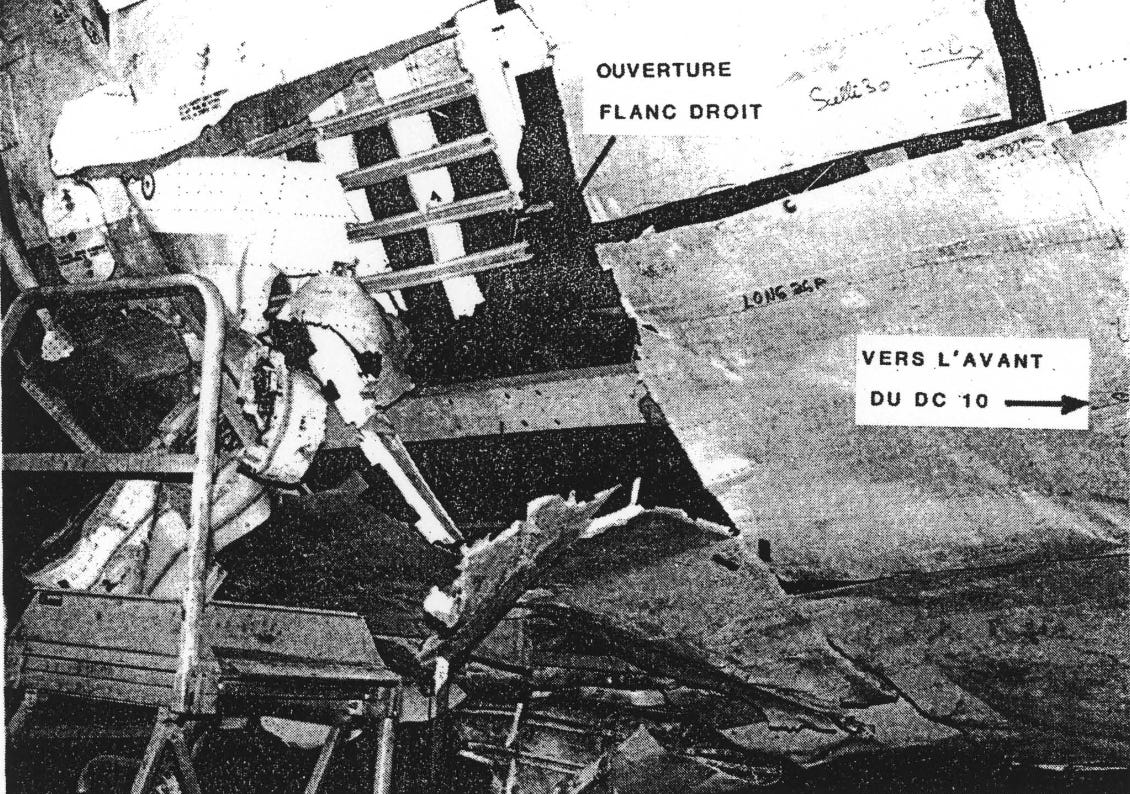
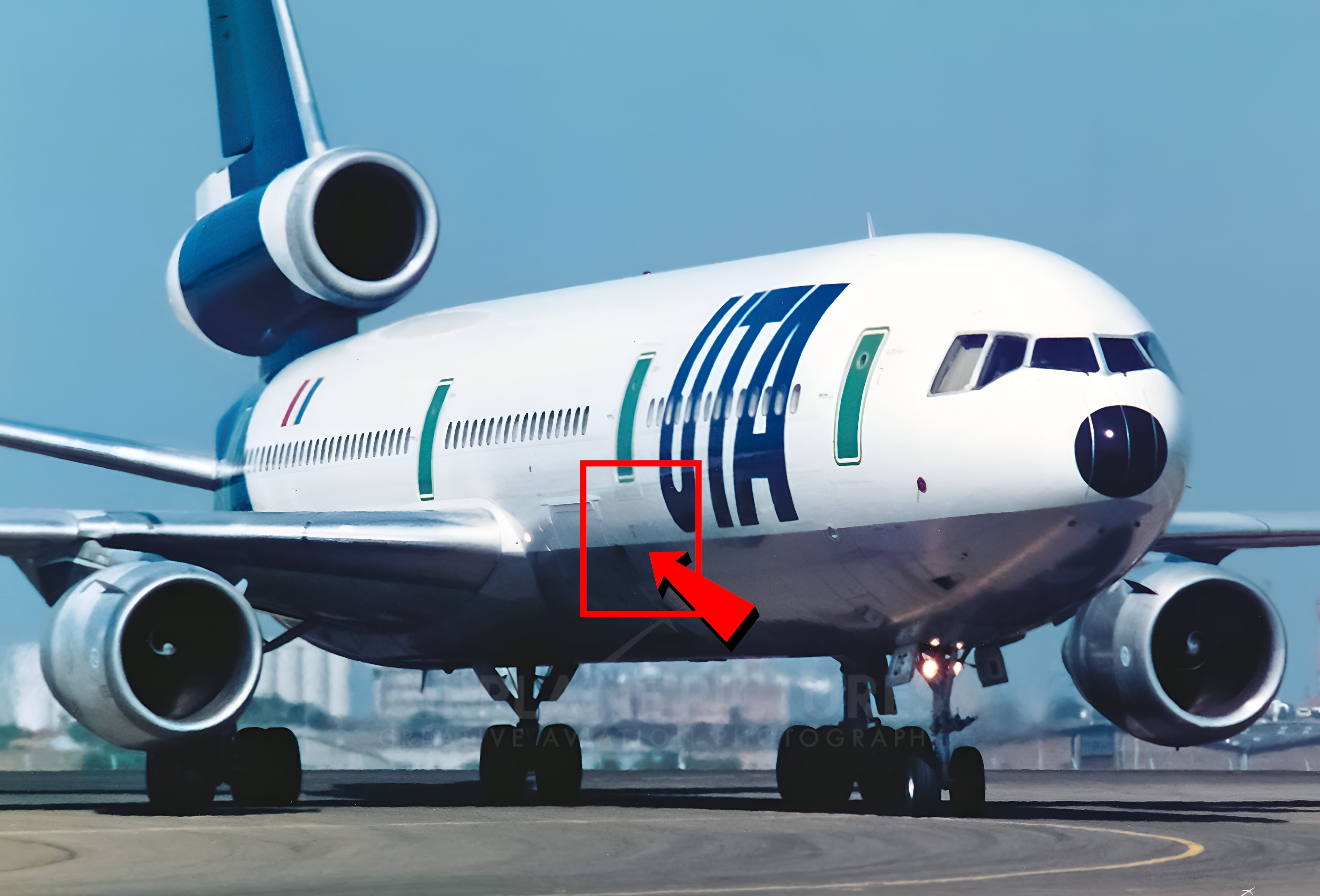
Container 7044 RK, located in position 13 right of the forward cargo hold. Its structure showed deformation consistent with the surrounding cargo hold floor and fuselage skin, confirming it as the epicenter of the explosion.
Meanwhile a large part of section B has been reconstructed in Paris. Container and cargo hold floor pieces; some of which showed characteristic evidence of explosion (small craters with melted metal); and others which showed distortion that could not be the result of the crash. Chemicals Analysis found traces of a powerful explosive called penthrite (PETN). Further investigation established that there was at least one kilogram of explosive on board. Further examination of the containers in the area of the explosion and the comparison between their distortions with those of the cargo hold floor and of the fuselage skin gave evidence that the explosion occurred in container No 7044 RK. This container was in the 13 right location.
🩺 The Human Toll
Medical analysis concluded that once the fuselage ruptured at cruising altitude, all passengers and cabin crew experienced:
The shock wave of the explosion
Instant depressurization
Rapid exposure to −45°C air temperatures
Complete oxygen deprivation
These conditions led to immediate unconsciousness and, tragically, no chance of survival.
In summary:
This accident was categorized as not survivable.
Five years previously, on 10 March 1984, a bomb destroyed another UTA aircraft from Brazzaville shortly after the DC-8 had landed at N'Djamena airport.
Chapter 6 - Outrageous Findings
Once it was established that UTA Flight 772 had been destroyed by a bomb, investigators faced two urgent questions: How did the device get on board, and who was behind it?
Cargo records and the loading position of container 7044 RK quickly narrowed the possibilities. This container — loaded into position 13 right in the forward cargo hold — contained only baggage checked in Brazzaville for passengers bound for Paris. It was inaccessible during the stop in N’Djamena. The commission therefore concluded that the most likely scenario was an explosive device hidden in luggage checked in Brazzaville for direct carriage to Paris.
🚪 Security Weaknesses at Brazzaville Airport
A detailed examination of Brazzaville’s security procedures at the time revealed serious vulnerabilities:
Mixed traffic flow – Domestic and international passengers, as well as their baggage, were processed in the same area. Access between public and restricted zones was poorly controlled, and the baggage conveyor was within easy reach. Overcrowding during multiple departures made strict supervision nearly impossible.
Pre-check from hotels – Passengers could have baggage “pre-checked” from their hotel the day before departure. These bags remained unsupervised at the airport for 12–24 hours in poorly secured containers.
Protocol-checking – It was common practice for an employee, friend, or relative to check in baggage on a passenger’s behalf. This opened the door for substitution or addition of items without the passenger’s knowledge.
No final baggage identification – At many secure airports, passengers were required to identify their checked baggage before boarding, directly at the aircraft. This measure was not in place in Brazzaville.
🎯 Plausible Methods of Infiltration
From these weaknesses, investigators identified three credible ways the device could have been smuggled on board:
A suitcase with a fraudulent Paris tag placed directly onto the conveyor belt or into the pre-checked baggage container
A bag checked in by a “protocol” proxy, who unknowingly accepted a substituted piece of luggage
A bag belonging to a passenger booked to Paris but disembarking in N’Djamena, leaving their luggage to continue onward
💣 Links to Lockerbie
One further question loomed: Was the destruction of UTA 772 linked to the infamous Lockerbie disaster the year before?
On 21 December 1988, a bomb detonated aboard Pan Am Flight 103, a Boeing 747 en route from London to New York. The aircraft disintegrated in mid-air, and wreckage rained down on the Scottish town of Lockerbie, killing all 259 people on board and 11 residents on the ground.
The short answer from investigators: Yes — the two attacks were connected as we’ll find out in the next chapter.
Chapter 7 - Criminal Prosecution
The investigation took a decisive turn when French authorities obtained a confession from a Congolese opposition figure. This individual admitted to helping recruit another dissident to smuggle the bomb onto Flight 772.
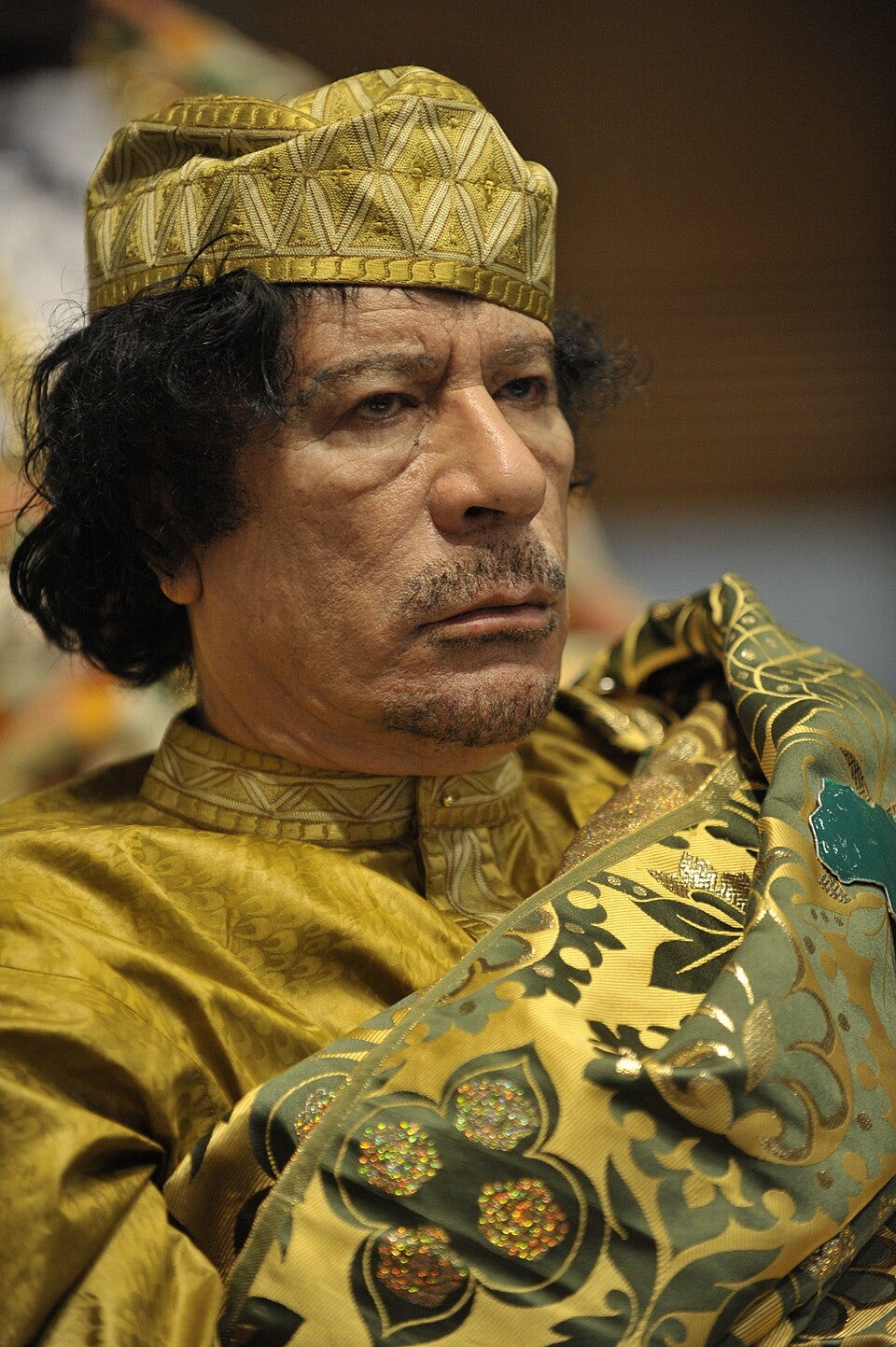
From this lead, Judge Jean-Louis Bruguière of the French anti-terrorism court identified six Libyan nationals as the perpetrators:
Abdullah Senussi – Brother-in-law of Muammar Gaddafi and deputy head of Libyan intelligence
Abdullah Elazragh – Counsellor at the Libyan embassy in Brazzaville
Ibrahim Naeli – Explosives expert, Libyan secret service
Arbas Musbah – Explosives expert, Libyan secret service
Issa Shibani – Libyan agent who allegedly purchased the bomb’s timer
Abdelsalam Hammouda – Senussi’s right-hand man, said to have coordinated the attack
⚖️ Trial in Absentia
In 1999, all six men were tried in absentia before the Paris Assize Court.
Libyan leader Muammar Gaddafi refused extradition, and all six were convicted without being physically present.
One of the most prominent figures, Abdullah Senussi, later resurfaced in the headlines. In September 2012, Mauritania extradited him to Libya to face charges for crimes committed during his time as Gaddafi’s intelligence chief. In October 2013, the International Criminal Court ruled that Senussi could be tried in Libya, lifting its arrest warrant.
🎯 The Alleged Motive
The motive attributed to Libya was retaliation against France for its military support of Chad during the Chadian–Libyan War (1978–1987). The conflict ended disastrously for Libya with its defeat in the 1987 Toyota War, culminating in the Battle of Maaten al-Sarra. Humiliated and forced into a ceasefire, Gaddafi blamed France and the United States for what he called “aggression against Libya” — resentment that investigators believe led to both the Lockerbie bombing (1988) and the destruction of UTA Flight 772 (1989). As we can see both bombings can be connected to the Libyan Leader at that time - Muammar Al Gaddafi.
💰 Compensation Battles
The Paris court initially awarded the victims’ families €3,000 to €30,000 depending on their relation to the deceased. Dissatisfied, the French relatives’ group Les Familles du DC-10 d’UTA negotiated a separate deal on 9 January 2004 with the Gaddafi International Foundation for Charity Associations: US $170 million in total, or $1 million per victim. By 2007, 95% of these payments had been made — though the families of the seven American victims refused and pursued separate legal action in the United States. In April 2007, a U.S. District Court found Libya directly responsible and, after a bench trial, awarded $6 billion in damages to families and the aircraft’s owners. Libya appealed.
Finally, in October 2008, Libya paid $1.5 billion into a settlement fund covering:
Lockerbie bombing victims
American victims of the 1986 Berlin discotheque bombing
American victims of UTA Flight 772
Libyan victims of the 1986 U.S. bombing of Tripoli and Benghazi
In return, U.S. President George W. Bush signed an executive order dismissing all pending compensation claims and restoring Libya’s legal immunity in terrorism cases.
Chapter 8 - A Lasting Scar in the Desert
The destruction of UTA Flight 772 claimed 170 lives from more than a dozen nations. It was an act of deliberate violence, executed without warning, and left no chance of survival. In the years that followed, painstaking investigation, international diplomacy, and legal battles brought some measure of accountability — but for the families, the loss remained immeasurable.
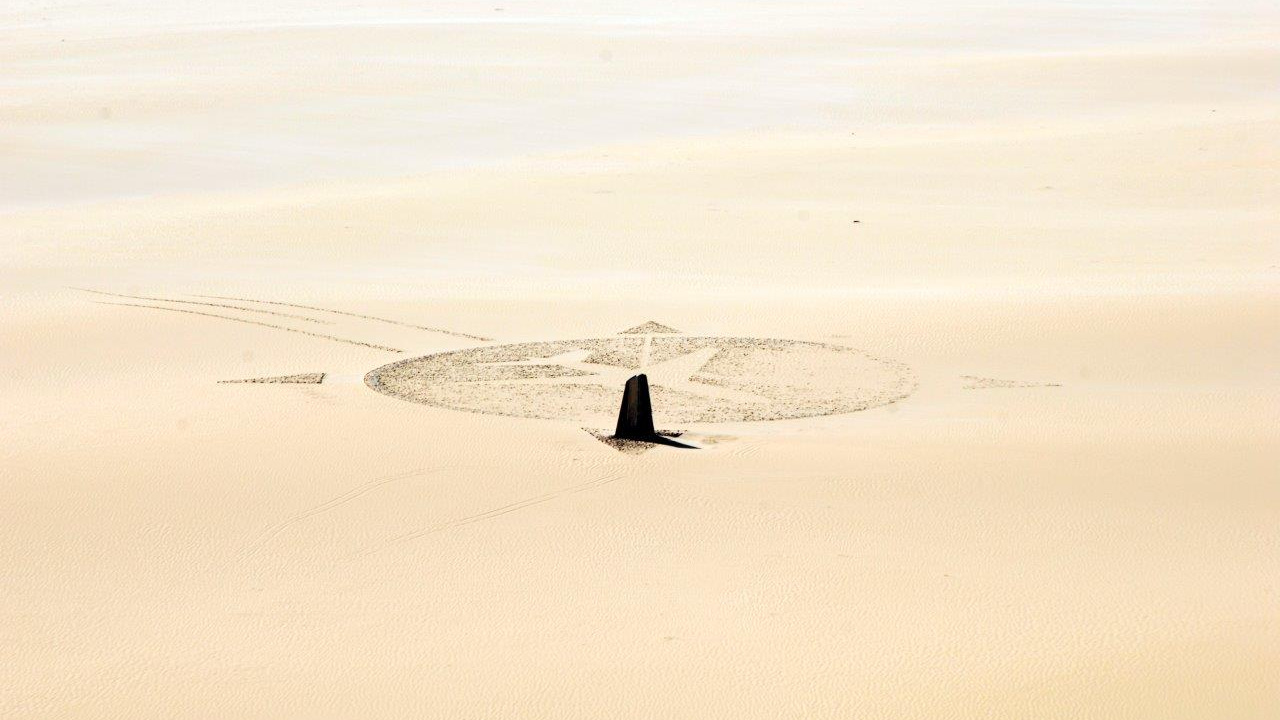
In 2007, the victims’ relatives — united as Les Familles de l'Attentat du DC-10 d'UTA — built a remarkable memorial in the Ténéré Desert. Organized by Guillaume Denoix de Saint Marc, whose father Jean-Henri died on the flight, the memorial was deliberately placed about 10 kilometres from the actual crash site. This preserved the sanctity of the impact location, while ensuring the tribute could be seen from planes flying the same route as Flight 772.
At 16°51′53.748″N 11°57′13.362″E, black rock was arranged into the shape and dimensions of a DC-10, set inside a giant compass. The starboard half of the aircraft’s horizontal stabilizer was brought from the wreckage to serve as a compass point. Surrounding it, 170 broken mirrors reflected the lives lost, and a plaque fixed to the stabilizer bore the names of everyone on board.
The memorial was so large it could be seen in aerial imagery, including on Google Maps — a deliberate message that even in one of the world’s most remote places, the tragedy would remain visible.
⏳ Time and Isolation
As of 2025, shifting desert sands have buried the memorial, rendering it invisible from above. Its physical form may be hidden, but its existence — and the effort it took to create — continues to stand as a testament to the determination of the victims’ families to mark this loss in stone, metal, and glass.
📜 Final Reflection
The story of UTA Flight 772 is not only about the mechanics of an aircraft destroyed in flight or the geopolitical motives behind it.
It is also a story about memory — of ensuring that, even where no road leads and no crowds gather, the names of the 170 will endure.
In the heart of the Ténéré, the wind now sweeps over buried stones — carrying their memory on.
Want more stories like this one?
Then come aboard – and subscribe to our channel for free.